

The thrill of driving your first fully electric vehicle (EV) is undeniable. The cutting-edge technology, interior comfort, economic savings, and whisper-quiet driving experience are unparalleled. As you settle into a regular charging routine, initial range anxiety quickly fades. But then comes a stretch of rainy weather.
You monitor the state of charge (SOC), wondering whether it’s entirely safe to charge your EV in the rain. It is a common question, and fortunately, the automotive industry has planned for it.
Charging Your EV on Rainy Days
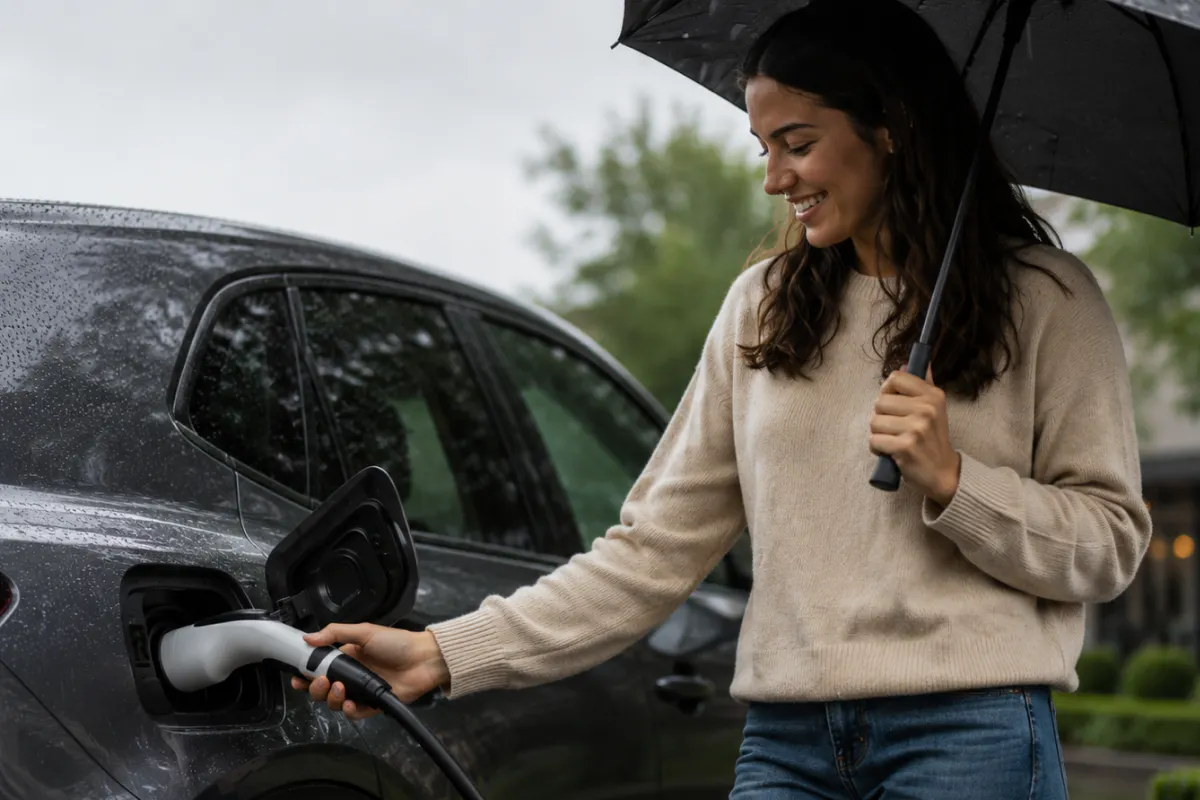
After a spell of rainy weather, if you notice moisture or condensation on opening your vehicle’s charging port cover, don’t be alarmed. EV batteries are engineered to operate in rain, hail, and snow and securely sealed from the elements.
Electric vehicles have advanced mechanisms, including waterproof gaskets, robust seals, and drainage channels designed to prevent rainwater from seeping into the electrical system. Use a clean, dry cloth to wipe away moisture before charging as usual.
Weatherproofing is only one layer of protection. Your EV’s charging equipment also includes ground fault circuit interrupter (GFCI) protection, which continuously monitors electricity flow. If it detects any irregularities, the system will instantly cut power.
Additionally, you might notice a brief pause between plugging in your vehicle and the actual start of charging. This is a smart “handshake” where the car and charger exchange digital signals before any high-voltage current flows. If the connector is not properly seated or if water is detected, the current will not initiate.
Consequently, charging your EV in wet conditions is safe, whether you are under a carport or using an open-air public charger. However, during extreme weather events like severe lightning or flash flooding, let common sense be your guide. The safest choice might be to delay charging until conditions improve.
Charging on Road Trips
Are you planning an adventurous day trip or a weekend getaway? The typical range of a modern electric car is at least 400 km, allowing you to enjoy the Australian outdoors without the burden of high fuel costs.
Thankfully, Australia’s network of public chargers is growing rapidly. Shopping centres, hardware hubs like Bunnings, supermarkets, service stations, and tourist destinations increasingly offer convenient high-speed top-ups.
Before you hit the highway, it is wise to download the apps for your preferred charging networks. Popular options across Australia include Tesla, NRMA, Chargefox, BP Pulse, Ampol, Evie, etc.
You could also order an RFID card from the Australian Electric Vehicle Association (you’ll have to join first), or an EV charging company. Similar to a credit card in size, the RFID card initiates the charge with a single tap. It's an excellent choice for areas with patchy mobile phone coverage. Combined with tools like PlugShare or A Better Route Planner, you will be fully prepared for your next road trip.
How weatherproof are public EV chargers?
Of course there’s no controlling the weather! But, arriving at a roadside charger in a downpour shouldn’t deter you. Public EV chargers are subject to strict regulations ensuring safety in all weather conditions including heavy rainfall. They feature comprehensive waterproofing, GFCIs, and heavily insulated connectors.
Manufacturers adhere to rigorous international standards, including Ingress Protection (IP) ratings, which classify protection against solids and liquids. Most Australian public charging stations carry high IP ratings, meaning they are built to withstand wet weather.
While you can purchase aftermarket weatherproof charging port covers, they are generally not considered essential. Vigilance is your best asset. It seems obvious, but use an umbrella to keep your hands dry, avoid puddles, and never submerge charging equipment in water.
Engineering Peace of Mind
Ultimately, electric vehicles and charging networks are engineered to withstand the elements so you can plug in on rainy days with confidence. Rain or shine, your EV will keep you moving safely and efficiently.
Curious about the future of driving? Visit our easyEV hub for more information!